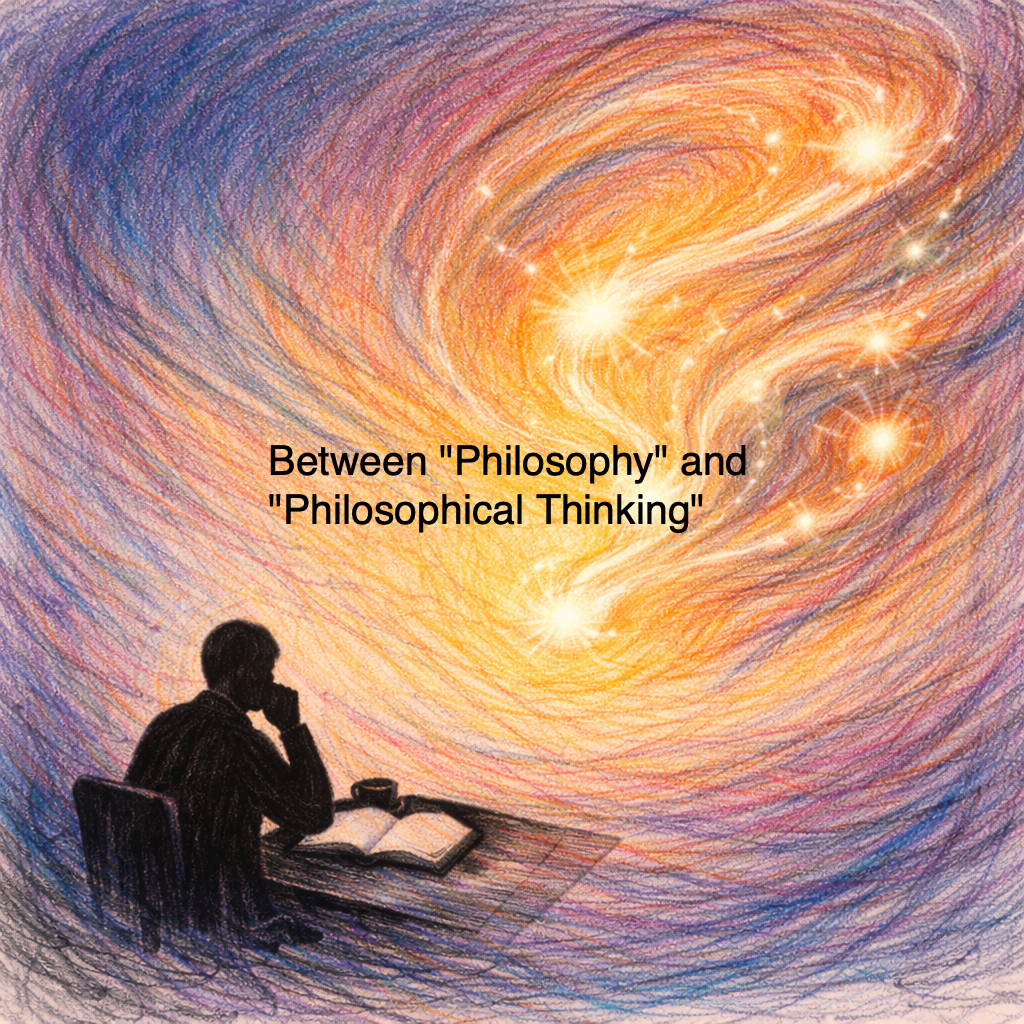
[3] Between "Philosophy" and "Philosophical Thinking"
Philosophy is a systematic, logical architecture of thought. As an academic discipline, it asks the big questions: Why should we live morally? What is justice? What does it mean to be human? The unconventional ideas and dense debates found in Plato or Kant belong to that world.

1 The Power of Philosophical Thinking
Everyone has those "Aha!" moments. Phrases like, “Life isn’t that special—everyone lives the same way,” “Love exists because it changes,” or “Money doesn’t matter as much as the heart” can feel strangely philosophical. They sound a bit more logical, a bit deeper than everyday talk—and the more people agree, the more profound they seem.
But strictly speaking, that isn’t philosophy. It’s closer to practical wisdom. What we usually call “philosophy” lives in the books—where philosophers spend a lifetime building arguments, brick by brick.
Philosophy is a systematic, logical architecture of thought. As an academic discipline, it asks the big questions: Why should we live morally? What is justice? What does it mean to be human? The unconventional ideas and dense debates found in Plato or Kant belong to that world.
Too far, too high Many are drawn to philosophy but find it hard to approach. The reason is simple: it feels distant from daily life. Words like being, transcendence, universals, and existence aren't exactly everyday vocabulary. When life gets hard and you open a philosophy book for answers, you often walk away with more question marks than you started with. That’s normal. Philosophy is difficult—even for the experts.
2 What we truly need: Philosophical Thinking
For most of us, what matters more than “philosophy” itself is philosophical thinking. It isn’t grand or abstract. It’s the act of doubting what you’ve taken for granted, stepping back to observe your own thoughts, and asking questions you’ve never asked before. It’s about reasoning through things carefully, checking for what you’ve missed, and wondering if there is a better way to see the world.
And there is one key test: Can your idea apply to everyone? If a truth only works for you, it’s just a personal story—not a universal truth.
One thought, many questions Take the thought, “People are selfish.” Philosophical thinking doesn’t stop there. It asks:When do people become selfish? Why do they act that way? Can this behavior be controlled? Am I being selfish even as I say this? Is “selfish” always a purely negative thing?
This chain of questioning is philosophical thinking. Philosophy always involves doubting your own beliefs. While saying “It’s okay to be selfish” offers comfort, digging into the why—all the way to the root—is what makes it philosophical.
3 Rational, but not heartless
Philosophy must be rational. It relies on analyzing, reasoning, testing, and reflecting. This can make it feel dry, as if there’s no room for emotion.
Yet, its power is surprisingly warm. It guides us toward ethics and allows for a higher level of self-awareness (meta-cognition). It keeps us from being swept away by emotion when life gets shaky.
Aristotle spent his life thinking about “everything in the world.” He classified reality through logic to build a system of knowledge—because what philosophers truly want is to uncover the principles that move our world.
Make it a habit Philosophical thinking doesn’t arrive overnight; you sharpen it over a lifetime. When it becomes a habit, your perspective grows richer. That strength quietly leads you to better judgment and better choices, becoming the real force that transforms your life.
I hope you’ll find a moment to meet it.
 김대근 DAEGEUN KIM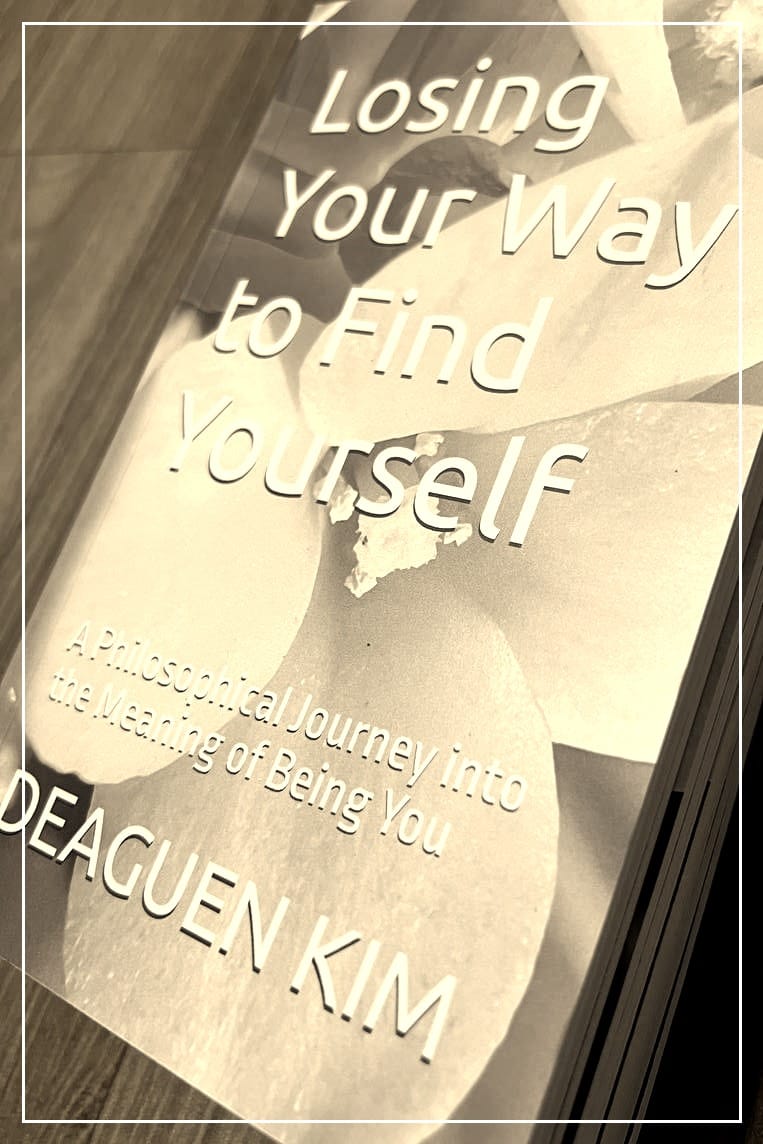
 김대근 DAEGEUN KIM
 김대근 DAEGEUN KIM