The Philosophy of Wealth and Prosperity: Lao Tzu's Tao Te Ching
Lao Tzu says, abandon greed, refrain from striving to take from one another, and instead, care for and support one another. This world is already filled with wealth and prosperity, so he pleads to stop that the former and to cease such actions.
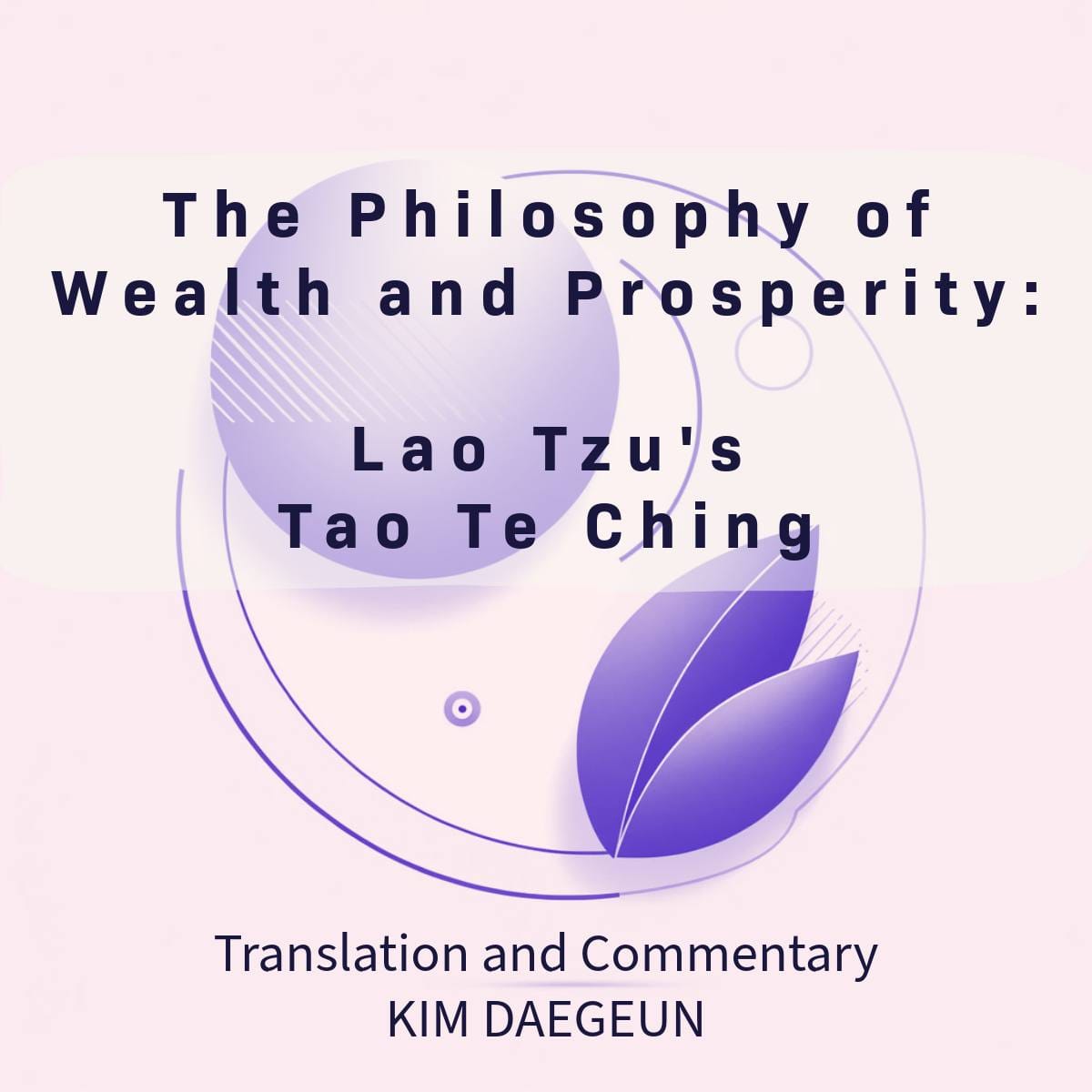
As of 2024, I am serially translating to Korea, Lao Tzu's Tao Te Ching under the title 'The Philosophy of Wealth and Prosperity: Lao Tzu's Tao Te Ching.' Lao Tzu was a person from the Spring and Autumn period of ancient China and is revered as one of the founders of Taoism and a key figure in Taoist tradition. The Tao Te Ching is a collection of his sayings compiled into a book. It is a Korean translation. Although there are no specific plans with a publisher or for publication yet, I intend to publish it as a book in the future.
1 Wealth and prosperity what everyone desires
Wealth and prosperity what everyone desires and is also one of the most essential elements that sustain a society. However, it has never been evenly distributed even once, serving as the source of inequality and the beginning of conflicts. Accordingly, Lao Tzu says, abandon greed, refrain from striving to take from one another, and instead, care for and support one another. This world is already filled with wealth and prosperity, so he pleads to stop that the former and to cease such actions.
Lao Tzu always emphasizes abandoning greed and living a simple life. But is such talk even feasible in today's world? It is inevitable to question whether it is acceptable to live this way in a capitalist society. There is also a fear of being pushed into the corners of life by living this way. Living without greed as an ordinary person, not a religious one, is a very challenging task. While being told to live a simple life, isn't even that possible only with money? Is there really an ideal society where people with no desires gather, where they do not take from each other or fight?
Why did Lao Tzu leave such a message? Although living a simple life and pursuing minimalism are good, Lao Tzu's thoughts seem too narrow-minded and passive to apply to modern society. So I pondered. Is there a way to bring Lao Tzu's thoughts into today's reality? Or perhaps there is a hidden secret?
What I found in his philosophy was a message of wealth and prosperity, and I decided to reinterpret his philosophy through this lens. Lao Tzu's purpose in urging people to reduce desire and live with a simple heart is ultimately to enjoy wealth and prosperity. Lao Tzu assumes one thing: that our world is already filled with wealth and prosperity. Therefore, he says, if we do not covet and do not strive to take more, there will be enough to live on.
2 The world is overflowing with wealth and prosperity
No philosopher advocates for becoming poor and living in poverty. Even if they say such things, their ultimate goal is a better life, a more fulfilling existence. Socrates, Plato, and Aristotle all shared this view. Their discussions on justice and the theory of forms should be understood in this context. The reason many sophists emerged in ancient Greece was because it was a land overflowing with wealth and prosperity. Consequently, art and literature flourished, and democracy was born.
Religion is no different. The places where Buddhism flourished were always cities with developed economies and were filled with wealthy merchants. Naturally, there were also great empires. People could willingly give alms to build enormous religious monuments. It is no different today. The Bible verse "Blessed are the poor in spirit" also aims for "blessedness." Moreover, Rome, with Christianity on its back, also thrived. All human values are underpinned by wealth and prosperity.
Looking back at human history, it is clear that humanity has continuously increased its wealth. Scenes like modern-day weddings were once only possible for nobility in previous eras. Of course, the wealthy, who are the modern-day nobility, spend even more money to hold grander weddings like emperors. Overall, humanity's wealth has increased enormously compared to hundreds of years ago. However, the gap between the rich and the poor has also widened accordingly.
In Lao Tzu's time, there were royalty, nobles, wealthy merchants, and landlords. Did they share their wealth generously? Some might have, but the majority probably did not. If they had shared their wealth, everyone would have had enough to live on, but humans did not do that. It was not nature that divided the rich and poor from the beginning; it was humans who chose not to share.
Lao Tzu was not a poor man. How could a poor person have learned to read and write? Those who learned to read and write belonged to the privileged class, and in that sense, learning to read and write meant having the potential to gain power. Lao Tzu was a successful person. His call to reduce desires and stop quarreling was directed at the sages, the future leaders of the country. ‘If you do well, everything will be fine!' That's what it meant.
3 Benefit all beings
Modern society is an era led by citizens. The wealth of citizens is the wealth of the nation. The so-called middle class. A group of people who have no significant lack of food and shelter, who operate on common sense and try to think rationally, who know how to share and give. This is the middle class. A nation where the middle class is substantial and where justice is upheld by them is a nation where wealth and prosperity can be abundant.
The reason why many people cry out for justice, fairness, and common sense is that these are ultimately related to the distribution of wealth, and the distribution of wealth becomes an important criterion for an individual's prosperity. This is also why Rawls' theory of justice continues to be discussed. Wealth and prosperity cannot be obtained solely through material abundance. They must be supported by corresponding spiritual values.
If people choose to share instead of trying to monopolize and take from each other, they can fully enjoy wealth and prosperity. This is the heart of Lao Tzu, who aims to benefit all beings. When Lao Tzu said to live like water and to practice non-action (wu wei), he meant that individuals must live with such an attitude for the wealth and prosperity given to each person on this earth not to disappear. When life is lived correctly, wealth and prosperity can also be eternal.
5 Introduction to the series
The Philosophy of Wealth and Prosperity: Lao Tzu's Tao Te Ching (In Korean).
 김대근 DAEGEUN KIM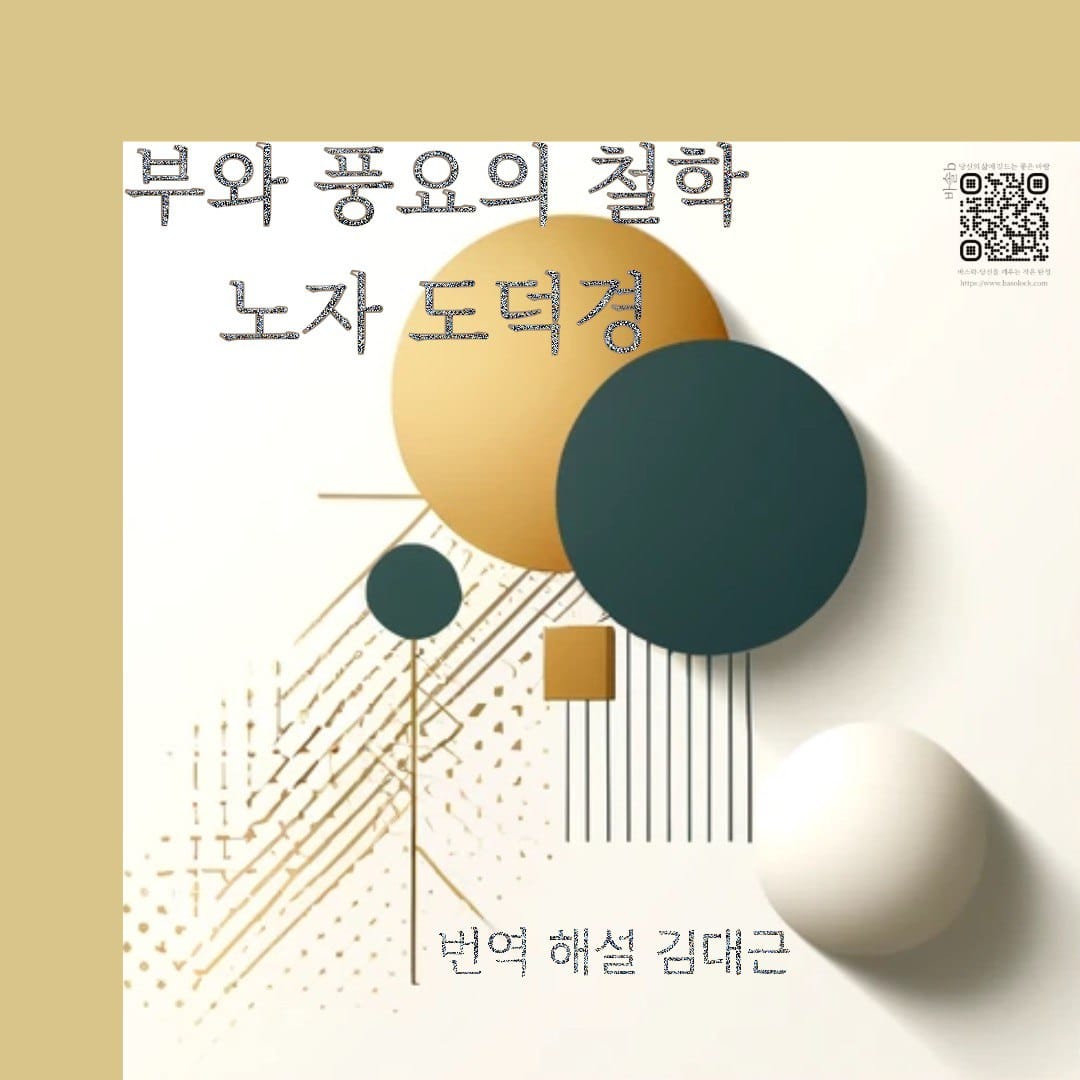
 김대근 DAEGEUN KIM
 김대근 DAEGEUN KIM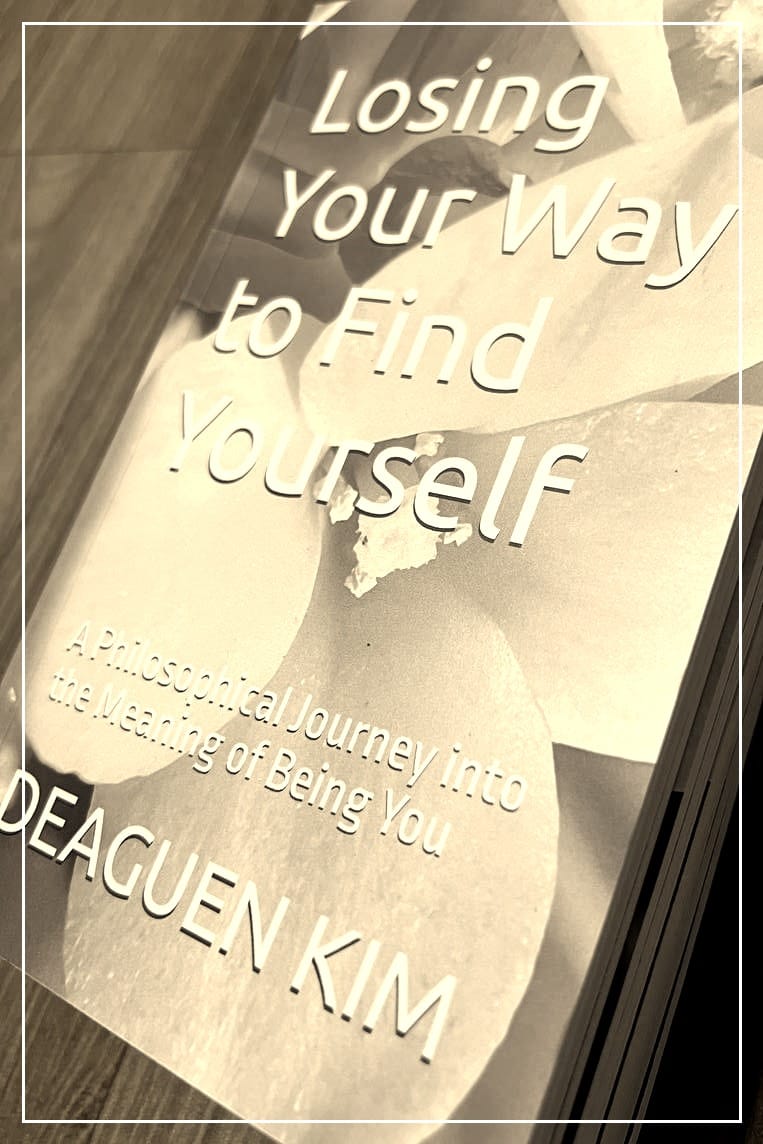
 김대근 DAEGEUN KIM